Overview
This project started with a real problem in a home garage workshop: tools and equipment were
stored on the floor, there was no dedicated workspace, and no organised storage for day-to-day
making and repairs. The solution was a purpose-built workbench designed to be strong, portable,
and long-lasting — with an emphasis on clean aesthetics and workshop practicality.
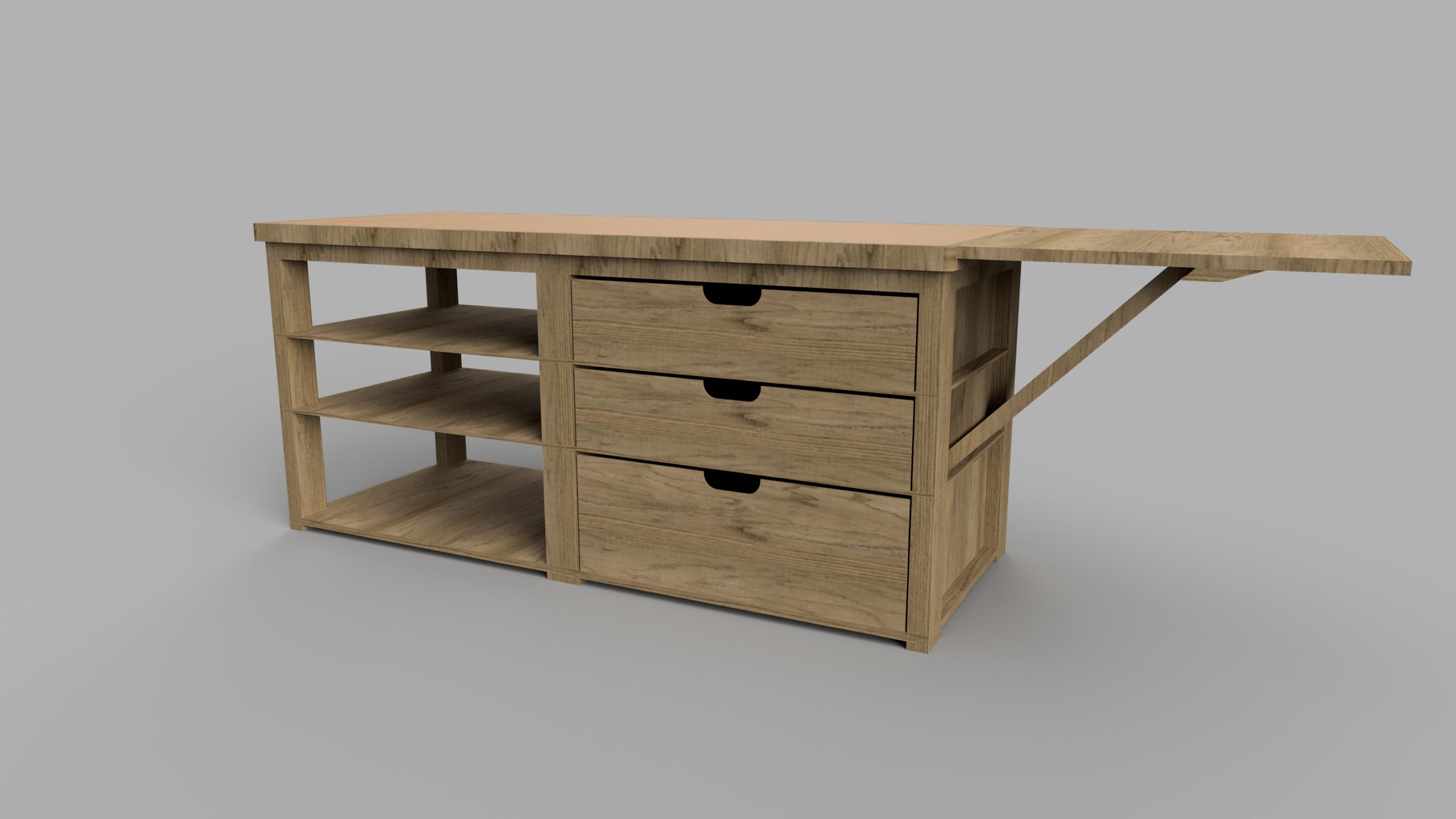
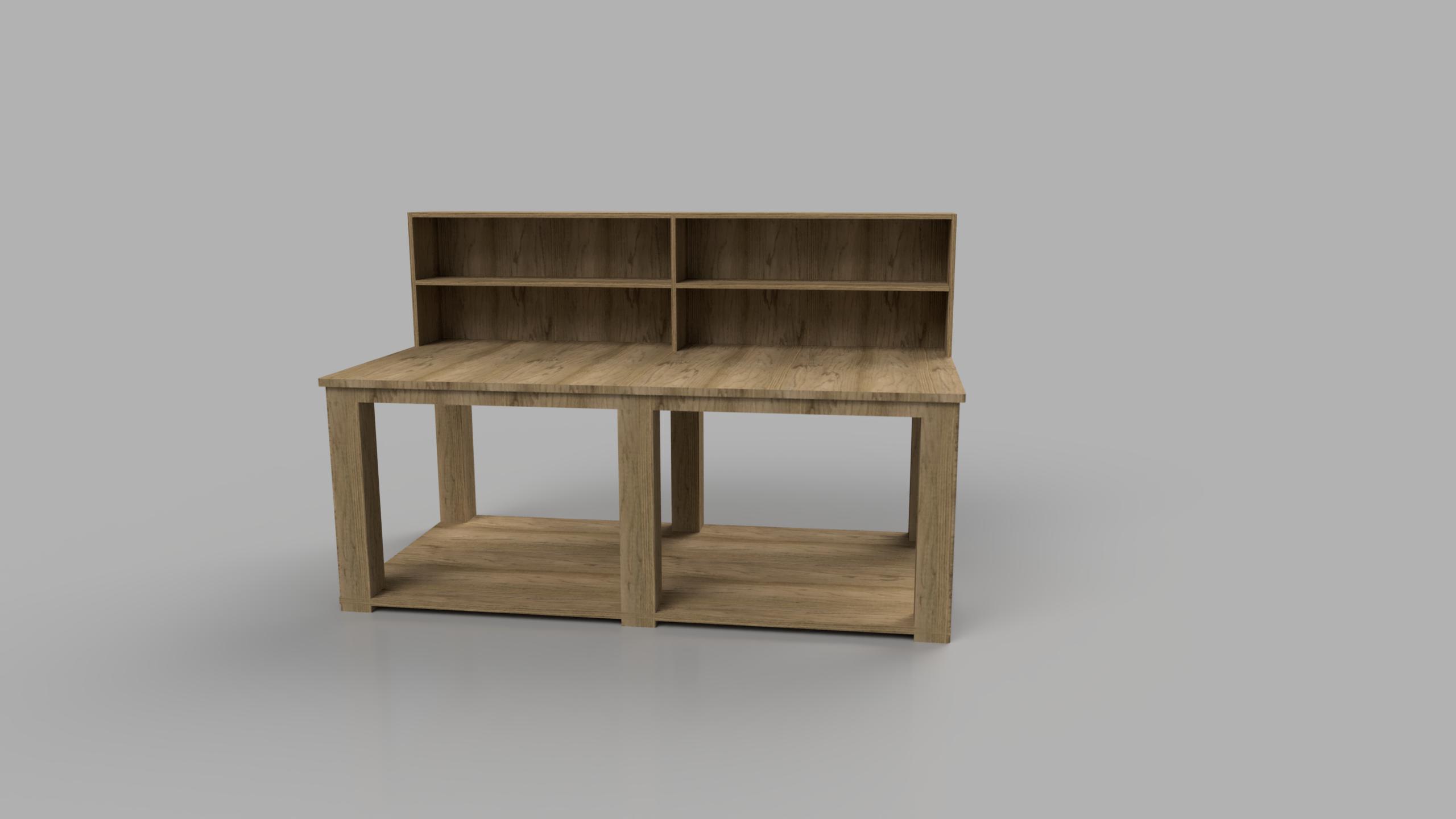
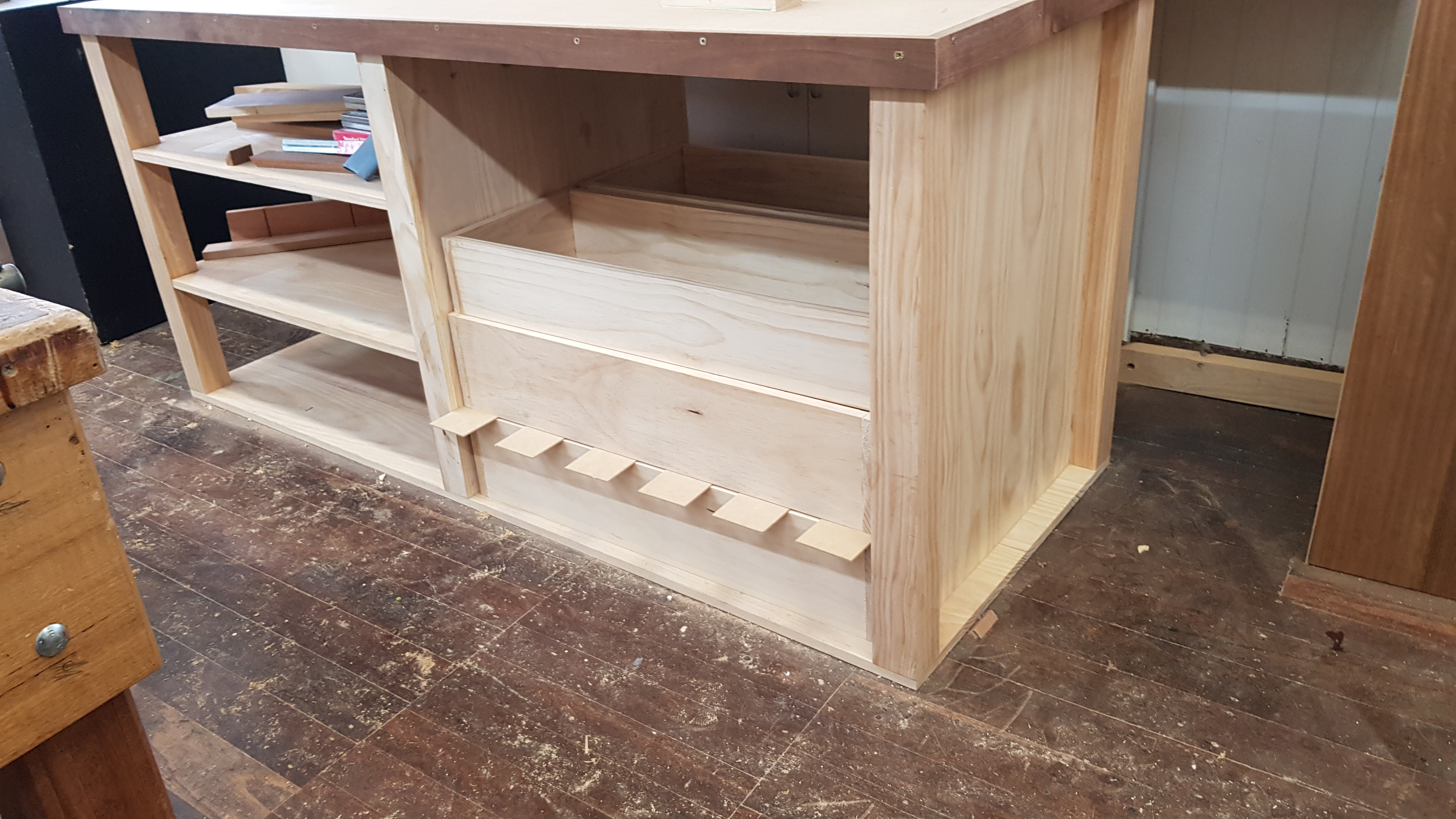
The final design combines a large work surface, symmetrical shelving, and multiple drawer heights
so small parts and bulky tools can be stored separately. A key feature is a replaceable top system:
the bench is built to take real abuse, but the wear surfaces are designed to be swapped when damaged.
View Workbench Folio (PDF)
Download
End User & Problem Definition
The end user was defined as a 16-year-old student who enjoys building items out of wood and other
materials. He works casually (café + cleaning), has a stable income for a student, and spends a lot
of time creating projects — but his garage environment had no proper work zone or storage system.
The main pain points were:
- Tools and equipment on the floor with no dedicated storage
- No large, stable surface to build on for long sessions
- Needs portability (moving house / repositioning in garage)
- Needs the bench to look clean and modern (dark timber contrast preferred)
To solve this, the bench was designed with extra support members to reduce break points, wheels
for mobility, and a replaceable tabletop system so damage doesn’t end the product’s life.
Specifications & Constraints
The project had clear dimensional targets to ensure the bench fit the garage and was comfortable
to use:
- Length: ~2000 mm
- Width: ~800 mm
- Height: ~900 mm
- Top overhang: ~25 mm on all sides
- Corner safety: curved corners to reduce hazards
Primary constraints:
- Must be sturdy enough to handle impacts and tool damage
- Must be movable (portable around the garage)
- Must have a replaceable tabletop
- Must fit well in the garage
- Budget: cannot exceed $500
Additional considerations were included to raise functionality and finish quality:
- Incorporate a sturdy built-in light
- Built-in magnetic tray for screws / small metal parts
- Finish before exams (project scheduling constraint)
- Quality tolerance target: ±5 mm precision on parts
- Should look good (clean, modern aesthetic)
Function, Priority & Product Design Factors
Primary function: a stable working surface for building, repairs, and general workshop tasks.
Secondary function: organised storage and protection for tools and equipment when not in use.
The design priority was durability: the bench must resist sudden impacts (hammer strikes, dropped tools,
general workshop abuse) and remain safe and usable over extended periods.
Quality Statement
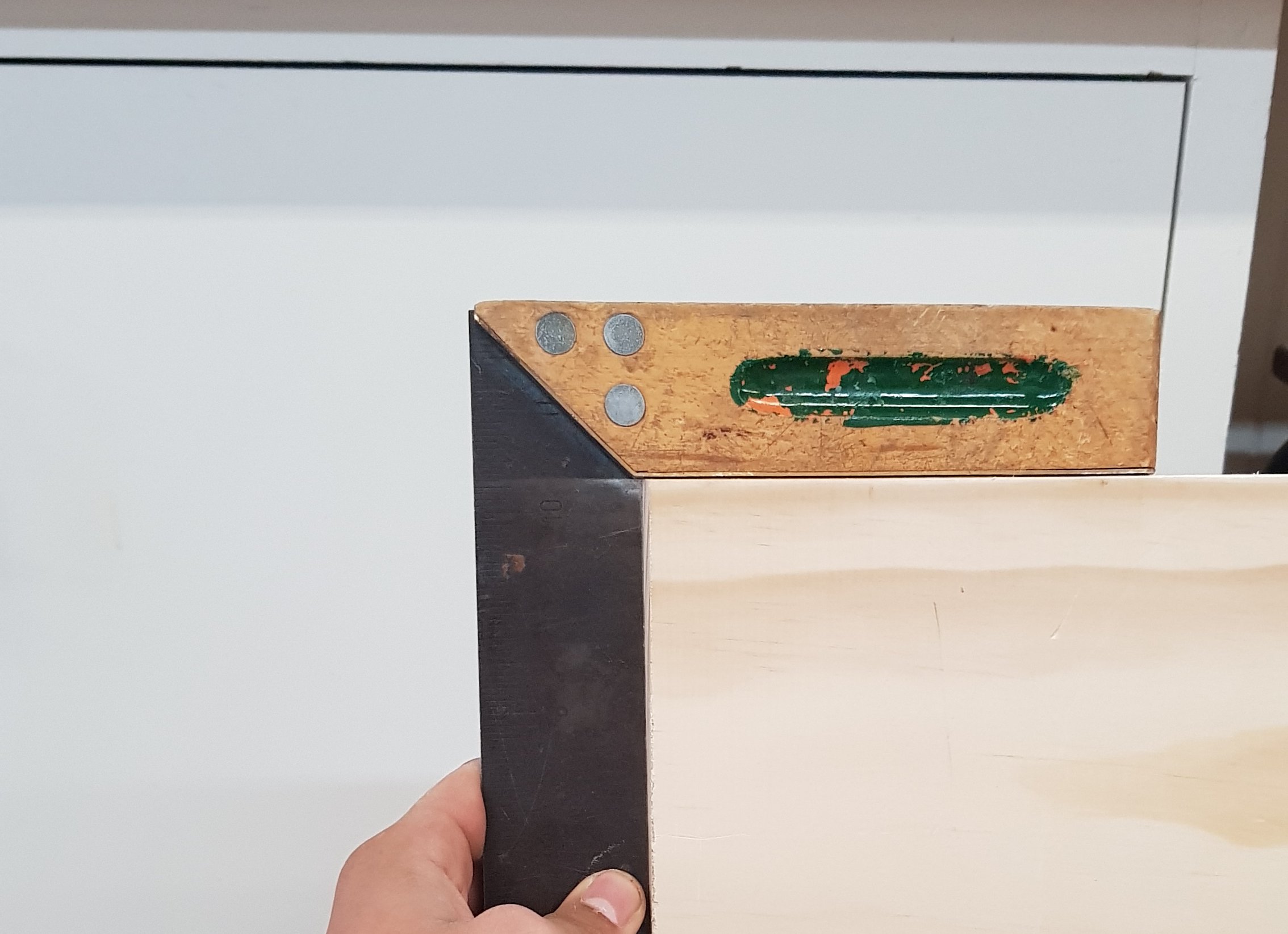
Quality was explicitly defined in the folio: the bench must be ergonomic for extended use,
have rounded corners and a fully sanded finish, and be manufactured to
±5 mm dimensional tolerance with correctly fitted, strong joints.
Design Options & Final Selection
Three design options were evaluated using consistent criteria:
sturdiness, portability, interchangeable tabletop, sustainability, and garage fit.
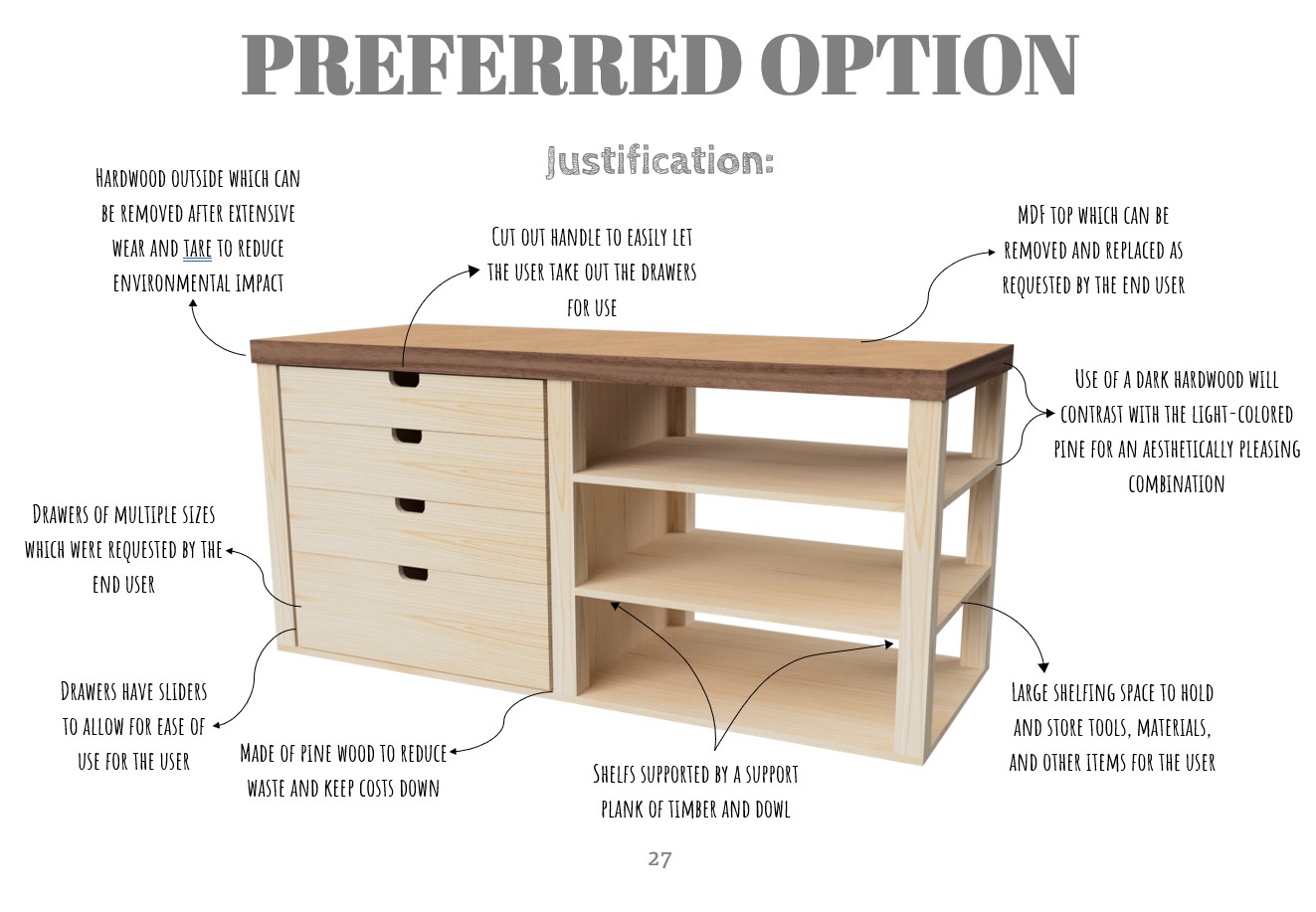
Option 1 was selected as the preferred concept.
Evaluation scoring (Option 1):
- Sturdy enough to handle damage: 5/5
- Portable: 4/5
- Interchangeable tabletop: 5/5
- Sustainable: 4/5
- Fits in the garage: 5/5
- Total: 23/25
The end-user rated Option 1 highest and described the design as clean, minimalistic, and aesthetically pleasing.
He highlighted the shelving and varied drawer sizes as key requirements, and confirmed the garage fit and access
constraints were satisfied.
Final Design & Key Features
The final product incorporates multiple functional upgrades and durability-focused details:
- Heavy-duty MDF top (designed to resist basic workshop tool damage)
- Outer hardwood brim screwed in so it can be replaced when worn
- Drawers with varying heights to dedicate storage by item type
- Symmetrical shelving layout for improved aesthetics and usability
- Leg sizing refinement (30 mm reduction) to increase usable storage space
Production Planning
Production was planned using a materials cutting list and a sequenced process table including
tools/equipment, safety precautions, and estimated time per step. This was used to control accuracy
and reduce rework.
The cutting list covered major components including MDF top, pine legs, top supports, shelves,
and drawer parts (fronts + internal pieces), ensuring the build could be completed inside budget.
| part |
material |
Length (mm) |
Width (mm) |
Hight (mm) |
amount |
| MDF top |
MDF |
1950 |
760 |
25 |
1 |
| Long top side |
... |
1970 |
10 |
65 |
2 |
| Short top side |
... |
780 |
10 |
65 |
2 |
| Legs |
Pine |
850 |
70 |
70 |
6 |
| Top supports |
Pine |
850 |
620 |
20 |
2 |
| Shelfs |
Pine |
760 |
975 |
20 |
2 |
| Small drawer front |
Pine |
850 |
20 |
150 |
2 |
| Medium drawer front |
Pine |
850 |
20 |
190 |
4 |
| Large drawer front |
Pine |
850 |
20 |
270 |
4 |
| Small drawer large piece |
Pine |
820 |
20 |
150 |
4 |
| Small drawer small piece |
Pine |
330 |
20 |
150 |
4 |
| Medium drawer large piece |
Pine |
820 |
20 |
190 |
8 |
| Medium drawer small piece |
Pine |
330 |
20 |
190 |
8 |
| Large drawer large piece |
Pine |
820 |
20 |
270 |
4 |
| Large drawer small piece |
Pine |
330 |
20 |
270 |
4 |
The sequence plan included the full workflow: measuring and marking, cutting, domino joinery,
glue-up/clamping, sanding, assembly, routing, and final drawer runner installation.
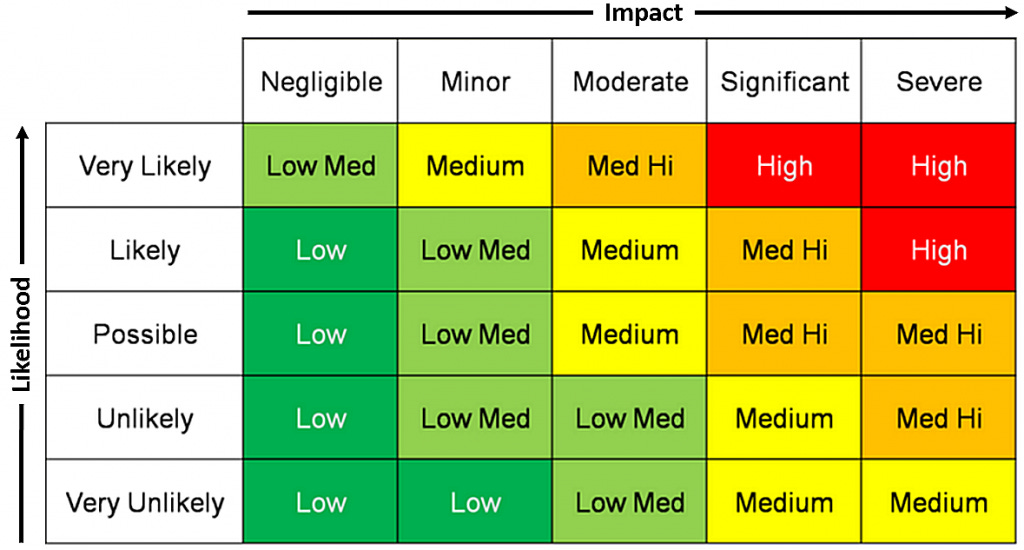
Risk Assessment & Workshop Safety
A risk assessment was produced for key workshop processes including routing, drilling, table saw,
and mitre saw operations. Hazards included entanglement, tool jamming/binding, dust/splinters,
electric shock, burns from hot drill bits, and trips from cords across walkways.
- Secure loose clothing, jewellery, and tie back long hair
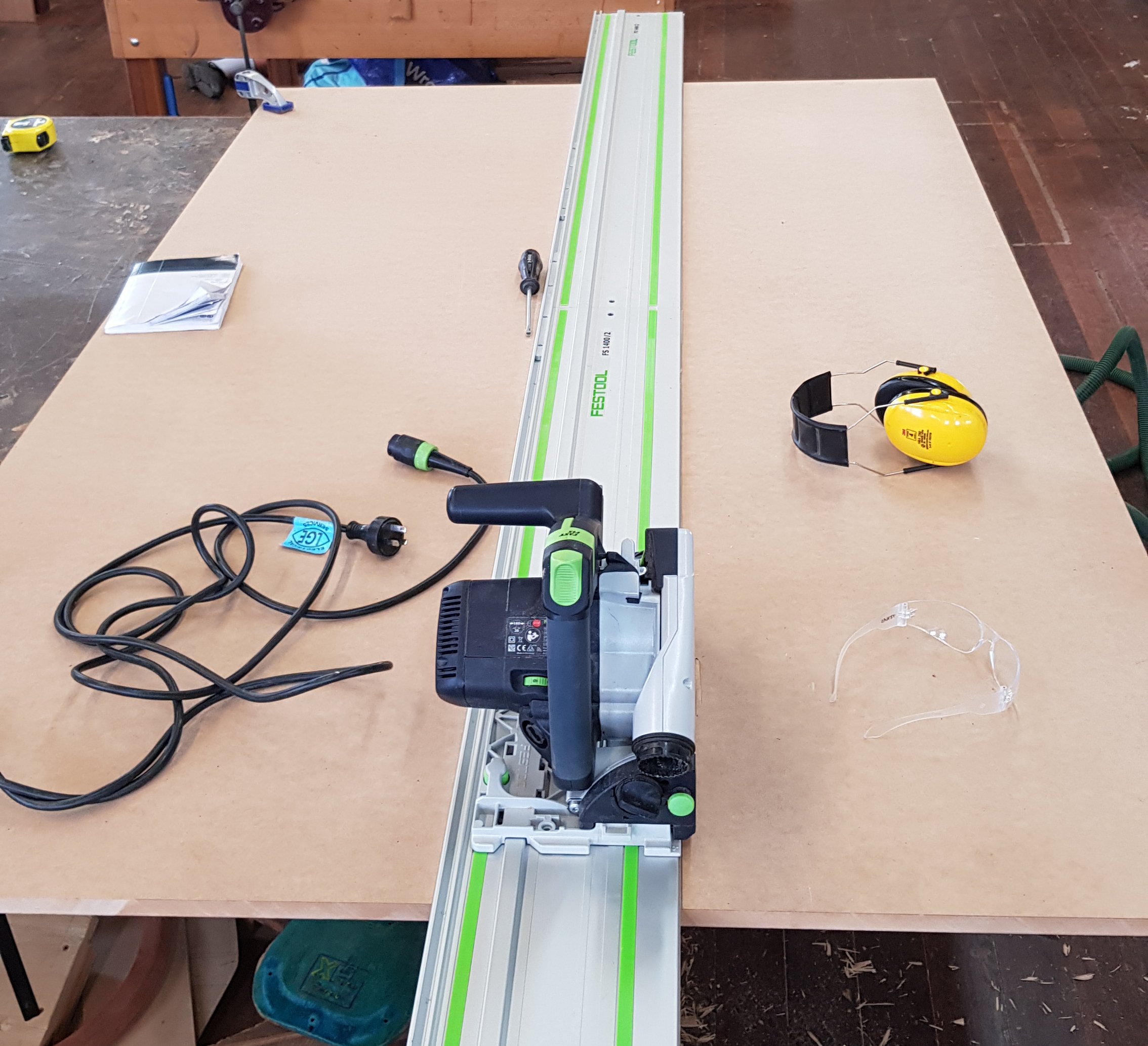
- Eye and hearing protection during machining
- Clamp workpieces before drilling/routing
- Keep cords taped down or routed above bench height
- Avoid using electrical tools near water
- Allow drill bits to cool before handling
Production Journal
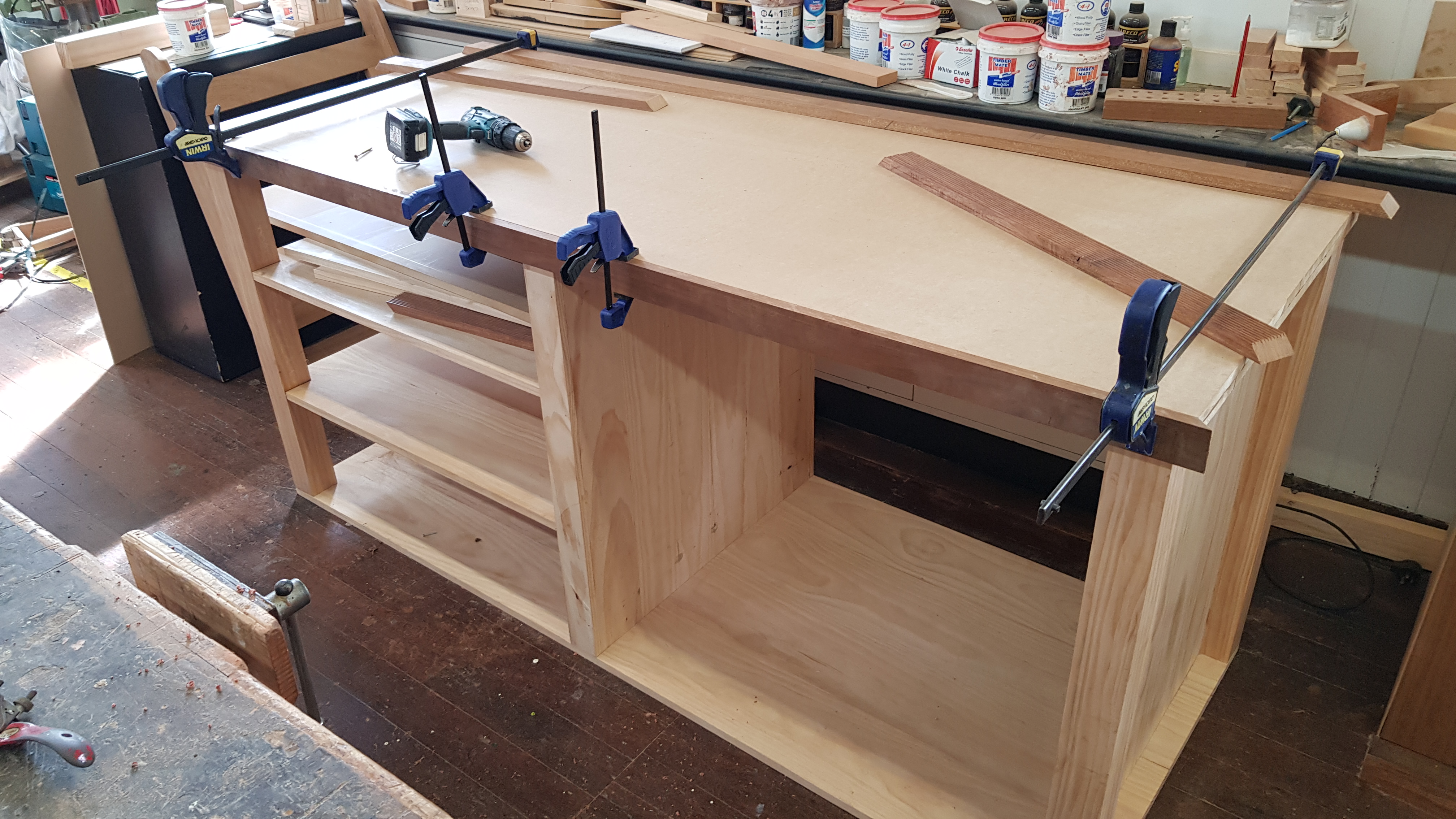
The build was documented over the semester with dated progress entries. Key milestones included:
- 3/08/2022: production began — materials marked and prepared (pine planks, chalk, tape)
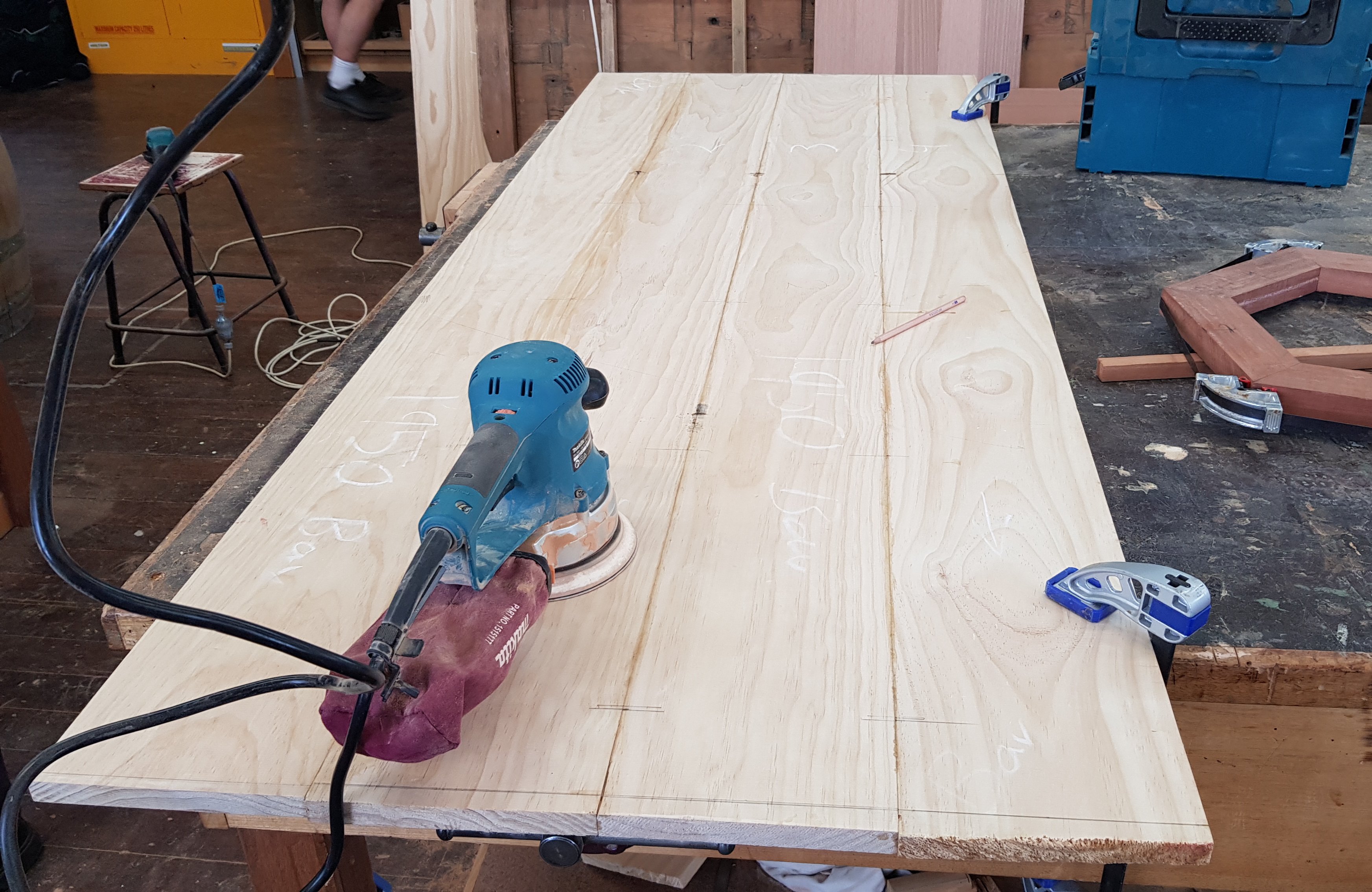
- 5/08/2022: domino joinery prep for shelf planks; glue-up and clamping
- 14–16/11/2022: MDF drawer bottoms attached and edges routed flush
- 16–18/11/2022: drawer runners installed using drill/impact driver
- 23/11/2022: cabinet runners installed, drawers fitted; next steps: castors + power + faces
Testing & Evaluation
Evaluation was completed against the original criteria. Strength was tested through real use:
the bench was used with multiple tools and even used as the surface for assembling parts of the bench itself.
- Sturdiness: bench remained solid under use; end-user feedback: “this is perfect”
- Portability: the design targets mobility via castors (added for moving/locking)
- Interchangeable top: replaceable, but heavy; improvement identified (lighter internal frame)
- Sustainability: low waste and offcut reuse; end-user impressed by minimal wastage
- Improvements noted: reduce slight creaking and increase durability further
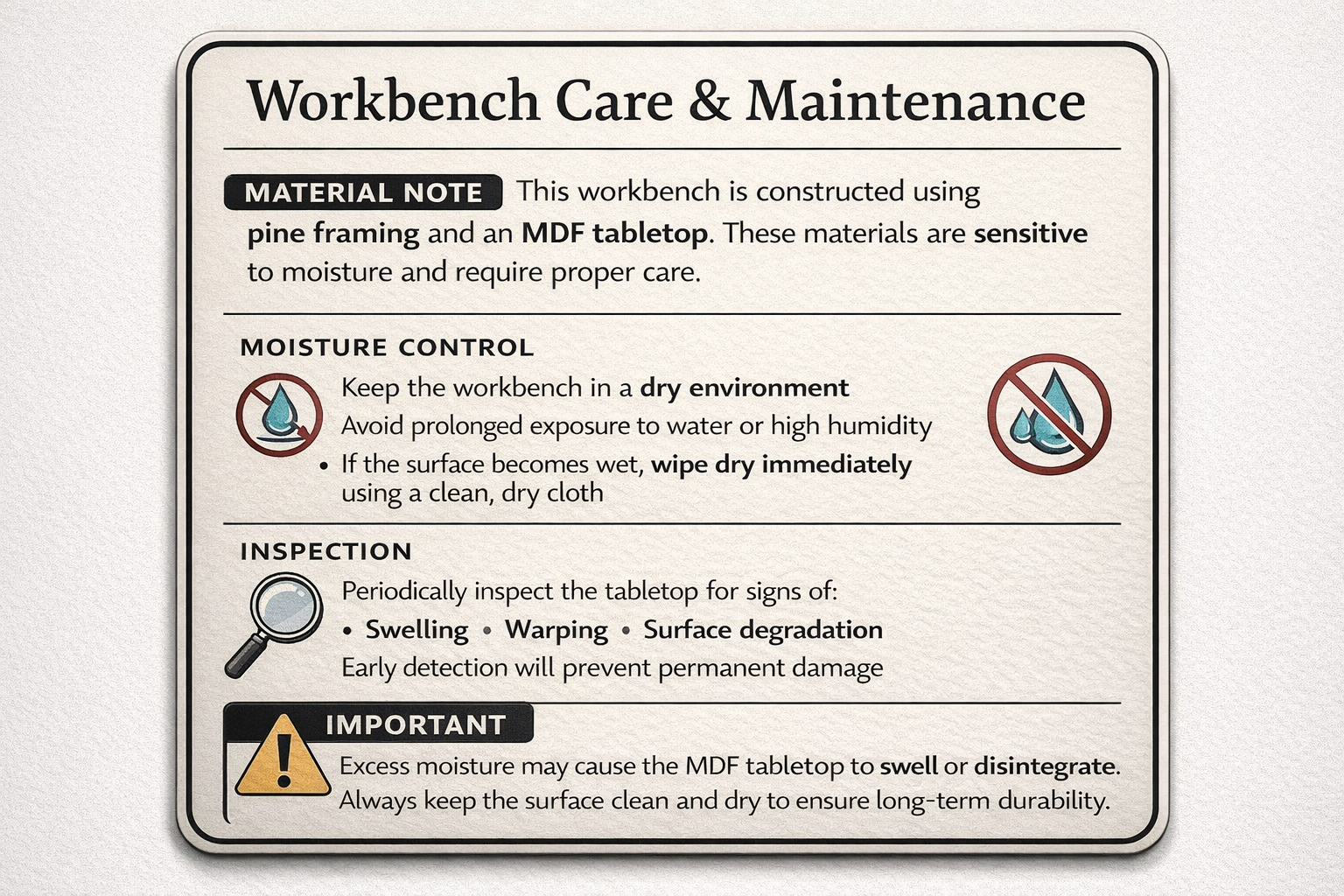
Care Label & Maintenance
A care label was produced to support long-term durability:
- Keep the bench in a dry environment — pine can warp when overexposed to water
- If wet, wipe water off immediately with a dry rag
- Periodically check the top for water damage or swelling
- Replace the MDF top / hardwood brim when wear becomes significant
Conclusion
This project demonstrates a complete product design workflow:
user profiling → constraints/specs → concept evaluation → production planning → safe fabrication →
and criteria-based validation. The final bench delivered the core goals: a strong work surface,
organised storage, and maintainable wear components designed for long-term workshop use.